Law Firm Website Not Generating Leads? 7 Reasons Why (and How to Fix Them)
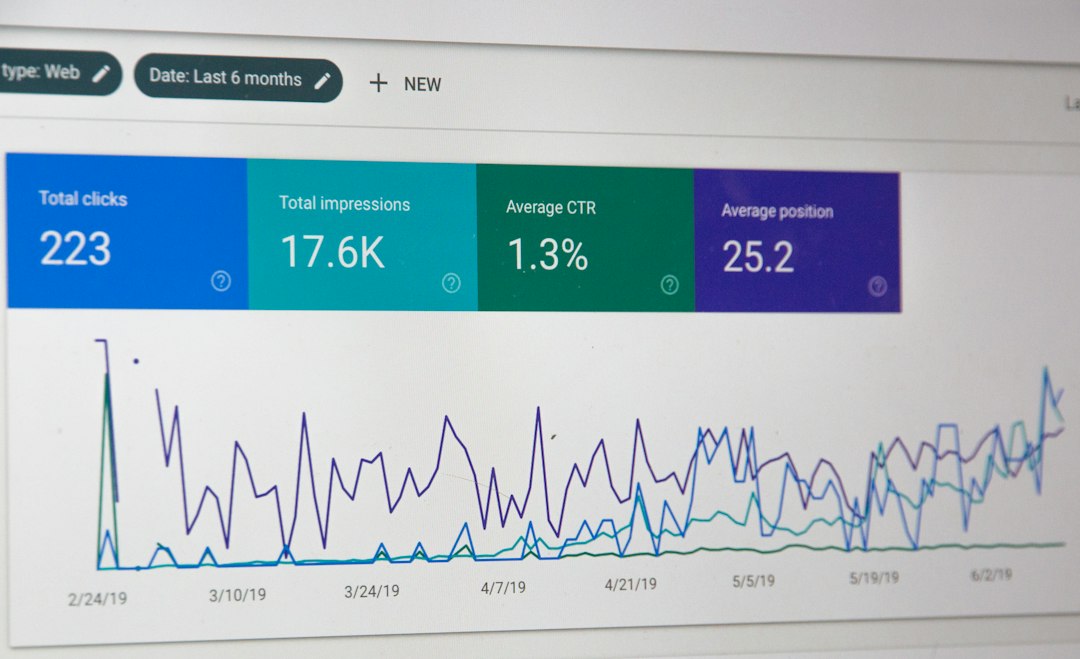
If your law firm’s site gets visitors but the phone stays quiet, the cause is almost always on the site itself: how the pages are built, what they say, and what the firm counts as a result.
The first instinct when the inbox goes silent is to order more blog posts or increase ad spend. Traffic goes up. Real client calls don’t, because the problem was never the number of visitors.
Here are seven common reasons — each with a self-audit you can run without an agency.
# Why a single “Services” page doesn’t bring in clients
A business owner whose tax invoices have been blocked by Ukrainian tax authorities is looking for help with exactly that. A page where that issue appears as one line in a long services list tells them nothing: no process, no timelines, no document checklist, no name of the lawyer who handles these cases. Search engines see the same problem. One page trying to answer every query at once ends up answering none of them in depth.
A dedicated page for each practice area — and within large practice areas, for the main case types — solves both problems. The client gets answers before they call. The search engine understands what the page is about.
Self-audit. List the five practice areas that generate the most revenue. For each, find a page on your site dedicated to it alone. If you find a paragraph on a general services page instead, that’s your problem.
# Why dozens of city pages backfire when you have one office
The opposite trap: a firm with a single Kyiv office creates pages titled “Lawyer in Kharkiv,” “Lawyer in Lviv,” “Lawyer in Odesa” — with text that differs only in the city name. These pages compete with each other. A visitor from Kharkiv realises within seconds there’s no office there. And nobody has the bandwidth to keep dozens of near-identical copies updated.
Chyzh Agency, which works with regulated niches including legal, puts it this way: if a practice handles cases remotely across the country, one strong national page explaining where the firm operates will outperform dozens of near-identical city pages. The agency also points out that legal structure changes everything. A sole advocate, an advocate’s bureau, an advocate’s association, a legal company, a notary, and a legal-tech service each have their own status, their own registry, their own permissible wording, and their own confidentiality obligations. Both points are developed in their breakdown of SEO approaches for legal websites.
If the firm takes only local cases in its own city, this doesn’t apply: it needs a strong office page and a clean Google Business Profile (more on that below). With multiple real offices, each can have its own page with an address, team, and specific practice focus.
Self-audit. Open any two of your city pages side by side. If swapping the city name is the only difference between them, merge them into one national page.
# Who wrote this, and who checked it?
Legal topics fall under what Google’s Search Quality Rater Guidelines call YMYL — Your Money or Your Life — content that can affect someone’s finances, health, or safety. A reader of “How to divide property in a divorce” is making decisions about their own assets. For them, an anonymous article with no author and no date is indistinguishable from the other ten they’ve already scrolled past.
A byline changes this — when there’s a verifiable person behind it. That means a lawyer with a profile on the site, a publication date, and a note on who reviewed the piece. In Ukraine, verification is literal: clients can look up any advocate or legal firm in public registries, and the details on the site must match.
| Practice type | Where clients verify status |
|---|---|
| Advocate | Unified Registry of Advocates of Ukraine (ERAU) |
| Advocate’s bureau | ERAU |
| Advocate’s association | ERAU |
| Legal company | Unified State Registry (UDR) |
| Notary | Unified Registry of Notaries |
Self-audit. Pull up the most-visited blog posts from the past six months. Does each one have an author, a date, and a reviewer’s name? Is the author listed under that exact name in the relevant registry?
# Does the site promise what legal ethics rules prohibit?
For advocate practices, Article 13 of the Rules of Advocate Ethics sets the boundaries for promotional copy. The Rules were adopted by the Founding Congress of Advocates of Ukraine on June 9, 2017; Article 13 has been in force as amended by the Congress of Advocates of Ukraine on February 15, 2019.
Under its second part, promotional materials may not contain evaluative descriptions of an advocate, criticism of other advocates, statements about the likelihood of successful case outcomes, or any other statement capable of creating unwarranted expectations in the client’s mind. Also prohibited: any claim implying that qualities inherent to the legal profession as a whole are unique to this particular advocate. All advertising must be objective, truthful, and free of innuendo or ambiguity.
How these rules apply to online advertising is clarified in Decision No. 196 of the Council of Advocates of Ukraine, dated September 22, 2017. Advertising must also comply with Ukrainian laws on advocacy, advertising, and consumer protection.
This directly affects SEO because prohibited phrases tend to appear in the most prominent spots: the page title, the meta description, the above-the-fold headline. “Best family law attorneys” contains an evaluative claim. “We win hopeless cases” and “guaranteed property recovery” make outcome promises. Less obvious: “we maintain attorney-client privilege” or “complete independence” in a firm’s list of advantages. Confidentiality and independence are inherent to the profession — presenting them as a personal achievement is exactly the impression Article 13 warns against.
The alternative is to describe the stages of your work and the courts and bodies where the advocate has handled similar cases. That sticks to verifiable facts — which is what Article 13 requires — and it also answers the questions the client came from search to find.
Self-audit. Export all page titles and meta descriptions using any SEO crawler. Search for the words “best,” “guarantee,” “guaranteed,” “we win.” Read each match against Article 13.
# Is the firm measuring visits or actual inquiries?
“Traffic is up” tells a managing partner nothing useful. What matters is how many people with a relevant case contacted the firm, and how many signed a retainer. A qualified inquiry means someone with a question in the firm’s practice area, from a region it serves, who left contact details. A call asking “how much is a road accident consultation?” to a firm that doesn’t handle accident cases doesn’t belong in that count.
To count them, every channel needs a trace. Forms should pass the source page and referral channel to the CRM. Calls should route through trackable numbers. Messenger inquiries get tagged manually by the person handling them if there’s no integration. Without this, the firm can’t tell which pages bring clients and which just bring visitors.
The reverse problem also exists: lots of inquiries, almost none in scope. That usually means the content is pulling the wrong audience. An article titled “How to write your own complaint letter” attracts people who want to avoid hiring a lawyer. That’s not bad content — but it’s not a client source.
Self-audit. Take last month’s inquiries and answer two questions for each: where did it come from, and was it within the firm’s scope? If the first question has no answer, the firm is currently measuring traffic, not leads.
# Is the Google Business Profile in order?
For a search like “divorce lawyer Dnipro,” clients often choose a firm directly from the map results — never visiting the website at all. In that scenario, the Google Business Profile decides whether the firm gets the call. It works when there’s a real office where clients are seen, and when the name, address, and phone number (known as NAP consistency) match across the profile, the website, directories — and for advocates, the relevant registry.
The failures here are mundane, which is why they persist. An old address after a move is still listed in a couple of directories. A duplicate profile created by a former employee still shows up on Maps. The profile lists hours until 8 pm, but no one answers after 6. A profile tied to an address where the firm doesn’t actually operate will eventually need explaining — to the client who shows up and to the platform itself.
Self-audit. Search the firm’s name in Google Search and Maps. Compare the name, address, phone, and hours in the profile against the website and every directory the firm is listed in. Fix discrepancies before anything else.
# Why doesn’t the firm appear in AI-generated answers?
For some legal questions, search now answers directly — through AI Overviews or AI Mode, with links to source pages. Google’s documentation on AI search features lists two requirements for a page to appear there: it must be indexed, and it must be eligible to show a snippet. No special additional requirements. The Google guide to generative AI features, updated July 10, 2026, explicitly states that Google Search ignores llms.txt files, and that “AEO/GEO hacks” are unnecessary.
The implication — one that not every agency will agree with — is that separate “AI optimization” using special technical tricks isn’t needed for Google Search. For a page to appear as the source of an answer about appeal deadlines, it needs to actually contain an answer about appeal deadlines. Which brings this back to reason one. No practice area pages means no content worth quoting.
Self-audit. From August 31, 2026, Search Console has made the AI Overview and AI Mode impressions report available to all sites. Check which of the firm’s pages appear there. Then use the URL Inspection tool to confirm that key practice area pages are indexed and don’t have a nosnippet directive blocking snippet display.
# Self-audit checklist
- [ ] Every main practice area has its own dedicated page — not a line in a general list.
- [ ] City pages exist only where there’s a real office; remote work is described on a single national page.
- [ ] Expert articles list an author, a date, and a reviewer; firm and author details match ERAU, UDR, or the Unified Registry of Notaries records.
- [ ] Titles, meta descriptions, and above-the-fold copy contain no self-evaluations, outcome promises, or criticism of other practitioners.
- [ ] Every inquiry in the CRM is tagged with the source page or channel; reports show in-scope inquiries and signed retainers, not total contact volume.
- [ ] Firm name, address, phone, and hours are identical in the Google Business Profile, on the website, and in all directories.
- [ ] Key practice area pages are indexed and not blocked from snippet display.
- [ ] Someone at the firm checks the AI Overview impressions report in Search Console on a regular basis.
Frequently asked questions
How long until the fixes start bringing in clients?
There's no honest universal answer. It depends on competition in your practice area, the current state of the site, and how many fixes you've actually implemented. Any contractor who guarantees 'top-3 rankings in a month' in the legal market deserves the same skepticism you'd apply to a competitor's 'guaranteed win' ad.
Where do we start if resources are tight?
Start by tracking inquiries. Until the firm knows which page a client came from, there's no way to tell whether any other fixes are working. After that: pages for your highest-revenue practice areas, then a clean Google Business Profile.
How many practice area pages does a law firm site need?
As many as the firm actually handles and wants to grow. A page for a practice area you don't take on will bring exactly the inquiries you'll have to turn down.