Ukraine Bank Reliability Ranking 2026: NBU Regulatory Data, Not Marketing
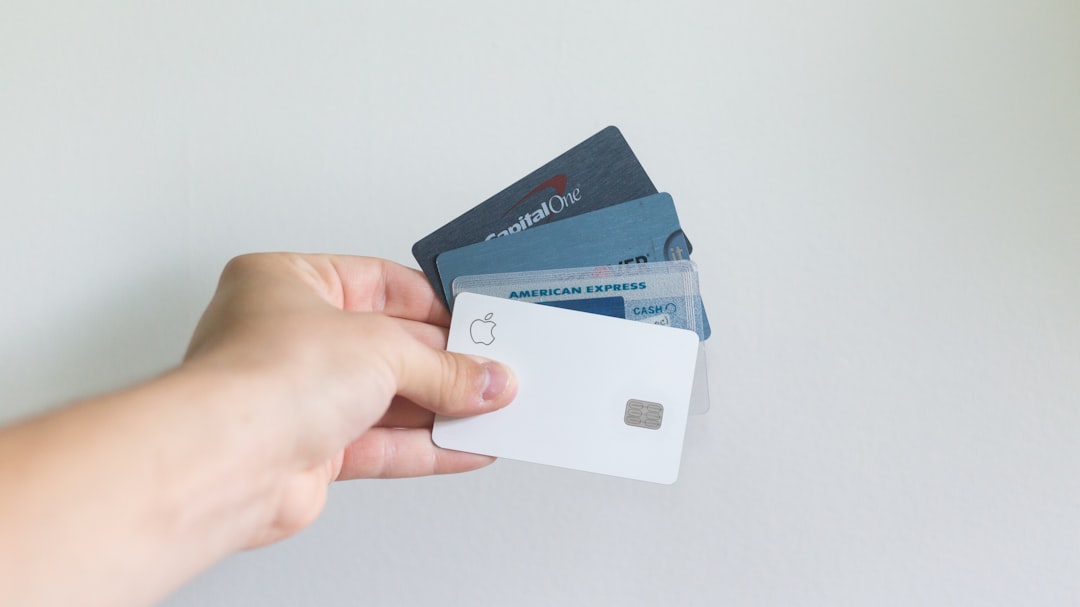
Want to find a reliable bank — without wading through “Best Bank of the Year According to Some Magazine” awards? Smart instinct. Most Ukrainian bank rankings are either paid placements or customer surveys about how pretty the app is. Neither tells you whether the bank survives a crisis.
The National Bank of Ukraine (NBU) — Ukraine’s central bank and financial regulator — does measure that. Every quarter it publishes mandatory compliance data for all 62 banks in the system. The numbers are public. The formula is public. You just need to know what to look at.
# Which NBU Standards Actually Measure Bank Reliability
The capital adequacy ratio H2 is the headline number — it tells you how much of the bank’s own capital backs its risk-weighted assets. The NBU requires a minimum of 10%, per Resolution No. 351. A bank sitting at H2 = 10.1% technically isn’t in violation. But it’s working without a cushion.
The formula:
H2 = Regulatory Capital / Risk-Weighted Assets × 100%
Simple logic: the higher the numerator (capital) and the lower the denominator (risky loans), the stronger the position. A bank with H2 = 20% can absorb twice the losses of a bank at H2 = 10% before breaching the standard.
# Liquidity Standards: H4, H5, H6
Liquidity measures whether the bank can pay depositors back right now. The NBU tracks three time horizons:
- H4 (instant liquidity) — minimum 20%. Covers obligations due within 24 hours.
- H5 (current liquidity) — minimum 40%. Covers the next 31 days.
- H6 (short-term liquidity) — minimum 60%. Covers up to 12 months.
Here’s an honest caveat: low H4 alongside strong H5 isn’t automatically a disaster. But if both are falling for three consecutive quarters — that’s a signal worth taking seriously. Trend matters more than a single snapshot.
# Credit Concentration Standard H7
H7 caps the maximum loan to a single borrower at 25% of the bank’s regulatory capital. A breach means the bank is dangerously dependent on one client. That kind of concentration was a contributing factor in a string of bank failures between 2014 and 2016, according to NBU post-crisis analysis.
# How to Read NBU Data: Kompanion’s Stability Index
The data lives at bank.gov.ua — go to “Banking Supervision” → “Bank Performance Indicators.” You’ll find quarterly tables for every bank in the system. Open one and you see all the ratios at once.
Our editorial formula for ranking reliability: we calculate a Stability Buffer Index (SBI) across three standards:
SBI = (H2/10) × 0.5 + (H5/40) × 0.3 + (H4/20) × 0.2
The logic: H2 carries the heaviest weight — 50% — because capital is the buffer against any type of loss. H5 gets 30%, H4 gets 20%. An SBI above 2.0 means the bank has a solid margin. An SBI of 1.0–1.5 means it’s technically compliant but thin. Below 1.0 means either a violation or a position right at the line.
Example calculation for a hypothetical bank with H2 = 18%, H5 = 65%, H4 = 35%:
SBI = (18/10) × 0.5 + (65/40) × 0.3 + (35/20) × 0.2 = 0.9 + 0.49 + 0.35 = 1.74 — solid.
This isn’t the only valid methodology — but it’s reproducible, and it doesn’t depend on anyone’s marketing budget.
# Ukraine Bank Reliability Ranking 2026
Based on NBU data as of January 1, 2026, here’s how the major bank groups look. All figures come from public filings on bank.gov.ua.
Notice Crédit Agricole’s H5 of 88% despite its relatively modest scale in Ukraine. That’s not a coincidence — the French parent bank mandates conservative liquidity management from its Ukrainian subsidiary. OTP (Hungarian ownership) and Raiffeisen (Austrian) follow the same logic.
But — and this matters — a high SBI doesn’t mean a bank is good for your business. Some of the leaders on this list are slower on payments or charge higher fees for business accounts.
State-owned banks are a category of their own. PrivatBank (Ukraine’s largest retail bank) and Oschadbank top the asset rankings, but they also carry a political dimension: the government will support them in a crisis. That lowers the effective risk to depositors below what the raw numbers suggest.
# NBU Stress Test 2024–2025: Who Passed and What It Means
A stress test isn’t a snapshot of today — it’s a simulation of a shock. The NBU sets a scenario: GDP falls 15%, the dollar exchange rate rises 25%, non-performing loans (NPL) reach 30%. Can the bank survive?
In the 2024 stress test — conducted using methodology adapted from the European Central Bank (ECB) — 20 of 23 tested banks passed without critical findings. 3 received recapitalization requirements. The NBU didn’t publish those banks’ names, but the existence of the requirements is documented in the September 2024 press release.
So here’s our honest editorial position: the stress test is the single best indicator of resilience, because it looks at “what if” rather than “what is.” The downside? It runs once every 12–18 months, while the quarterly ratios update four times a year.
# What Does the NBU Do When a Bank Violates Its Standards?
The NBU escalates in steps: first a warning, then a financial recovery plan, then — in extreme cases — temporary administration and liquidation. Since 2015, the regulator has liquidated more than 80 banks. It was painful. It was also necessary. The IMF’s 2020 memorandum credits that cleanup as the reason Ukraine’s banking sector held together in 2022.
# Deposit Insurance: What You’re Actually Covered For
Since January 1, 2024, Ukraine’s Deposit Guarantee Fund (DGF) covers up to UAH 600,000 ($15,000) per depositor per bank. The previous limit was UAH 200,000 ($5,000) — tripled under Law No. 3500-IX.
But: foreign-currency deposits are converted to hryvnia at the NBU exchange rate on the date payouts begin. Say you held $20,000 at a rate of UAH 42/$ = UAH 840,000 — you’d receive UAH 600,000. That’s a UAH 240,000 ($6,000) loss.
Which is why: if you’re keeping more than UAH 600,000 ($15,000) in a single bank, reliability isn’t theoretical. That’s real money you could lose in a bankruptcy.
And yes, the practical advice is obvious — but most people ignore it anyway: split large amounts across 2–3 banks with different shareholders. State-owned plus foreign capital is a solid combination.
# Red Flags: When a Licensed Bank Is Still Dangerous
Regulatory ratios aren’t everything. There are signals worth monitoring on your own.
H2 drops three quarters in a row. Not a violation — but a trend. Moving from 18% to 15% to 13% means the bank is either piling on risky assets or bleeding capital.
Aggressive deposit rates. If a bank is offering 18% on hryvnia deposits when the market average is 13–14%, it’s paying up for funding. Why? Either it has a liquidity problem, or it’s financing questionable projects. Probably worth asking.
Customer complaints about delayed withdrawals. This isn’t a “service quality” issue — it’s a symptom. If clients are reporting they can’t access their money, the process has already started. Track complaint trends on minfin.com.ua, Ukraine’s largest financial comparison platform — it shows complaint volume per bank over time.
License revocation or restriction. This is an intermediate step before liquidation. The NBU publishes all banking license actions in a public registry.
What’s not a red flag: a bank’s position in a magazine ranking, a new CEO, or a rebrand. Pure marketing — zero correlation with regulatory compliance.
# See Also
- Loans for Small Businesses and Sole Traders
- Deposits and Savings Accounts in Ukraine
- Ukrainian Banks — Fees and Account Conditions
- Financial Calculators — Deposit and Loan Calculations
Frequently asked questions
How do I check a Ukrainian bank's reliability myself?
Go to bank.gov.ua → 'Banking Supervision' → 'Bank Performance Indicators.' Find the bank and check H2 (must be ≥10%), H4 (≥20%), H5 (≥40%). If all three are 1.5–2× above the minimum, the bank is considered stable. Also watch the trend: if H2 has dropped for three consecutive quarters, that's a warning signal.
Does state-owned automatically mean reliable?
Not automatically. State banks carry an implicit government guarantee — but that doesn't replace checking the ratios. PrivatBank was nationalized in 2016 precisely because its standards were violated. Check H2 and H5 even for state banks. Government recapitalization is possible but not instant.
What is the NBU stress test and when was the last one?
The NBU stress test models bank behavior under shock conditions: GDP drops 15%, non-performing loans spike, hryvnia depreciates 25%. In the 2024 stress test, 20 of 23 tested banks passed without critical findings; 3 received recapitalization requirements. The next cycle was expected late 2025 / early 2026. Results are published on bank.gov.ua.
Are deposits insured if a bank fails?
Yes — but only up to UAH 600,000 ($15,000) per depositor per bank. Ukraine's Deposit Guarantee Fund (DGF) raised this limit from UAH 200,000 to UAH 600,000 on January 1, 2024, under Law No. 3500-IX. Anything above that limit is uncompensated in a bankruptcy. If you're keeping more than UAH 600,000 in one place, bank reliability isn't an abstract concept — it's money at risk.
Is monobank reliable?
Monobank operates under Universal Bank's license. According to NBU data as of January 1, 2026, Universal Bank met all key standards: H2 — 14.8%, H5 — 62%. That's above the minimum, but lower than state banks or Raiffeisen. Fine for deposits up to UAH 600,000 ($15,000). For larger balances, compare alternatives.