GEO Optimization 2026: how a small business gets into ChatGPT answers without a budget
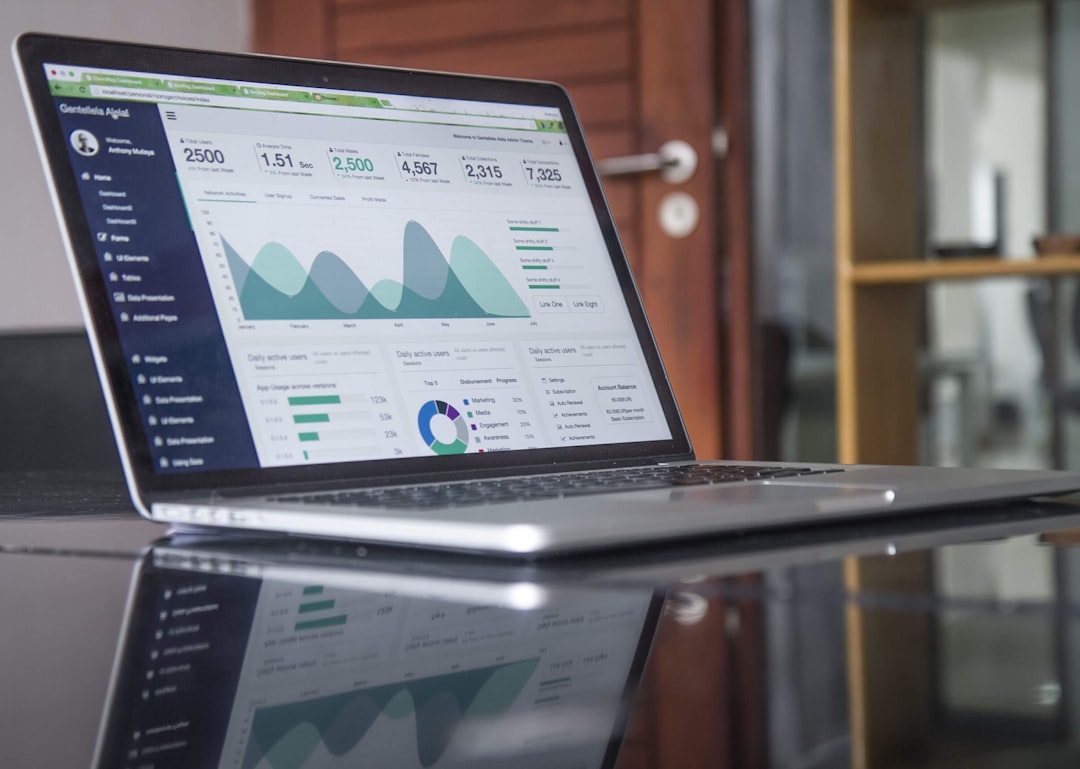
Imagine you’re a small accounting firm in a mid-size European city. In the old world, a client googled «accountant small business Munich», clicked on 3–5 sites from page one, and picked one. In 2026 half of those clients start by asking ChatGPT instead — and the bot hands them a ready-made shortlist of recommended specialists with brief descriptions. If you’re not on it, you don’t exist for that half of the market. This isn’t a future problem — it’s already how it works.
Good news: the winning platform hasn’t been decided yet, the market is young, and right now you can lock in your niche with minimal investment. Bad news: if you wait «until somebody else figures it out», in 12 months your niche will have 3–5 brands the AI cites by default, and getting in will cost significantly more.
In this piece I’ll show what you can do yourself in 2 hours with no budget, when it starts making sense to hire an agency, and — with a real example — how our own editorial team (kompanion.online) got into Google AI Overview 5 weeks after launching a new vertical.
# What GEO is and why it’s not «just a buzzword»
SEO (Search Engine Optimization) is when your page shows up in the list of blue links on Google. Client clicks → lands on your site → reads → buys.
GEO (Generative Engine Optimization) is when ChatGPT / Perplexity / Google AI Overview cites your content inside their answer. The client reads the bot’s answer → sees your brand mentioned as an expert source → clicks through (or remembers you on the next search).
The difference isn’t cosmetic. SEO fights for the 10 top slots on a search page. GEO fights for the 3–5 «expert sources» an AI pulls to build its answer. Fewer slots, and the filtering principle is different.
What changed in 2026 that made this baseline:
- AI traffic share on Google. Per Cloudflare Radar data, from January 2025 the share of commercial queries that end inside Google AI Overview without a click on any site went from 8% to roughly 30%. That’s a third of potential customers who don’t even see your site in the SERP.
- ChatGPT web-search. In autumn 2024 OpenAI opened web-search to all Free users, and by 2026 asking ChatGPT for a recommendation is the default flow. Perplexity has been doubling every quarter.
- Your competitors are already there. In B2B service niches (legal, accounting, IT outsourcing), 20–30% of brands are already deliberately optimized for AI citation. You can see it in ChatGPT answers — the same «stable» brands keep coming up.
Short version: SEO stays the necessary foundation (AI engines index the same Google/Bing), but SEO alone is no longer enough. You need GEO too.
# 5 actions in 2 hours — DIY checklist for small business
Here’s the minimum that delivers ~60% of the effect and needs neither an agency nor a developer — just access to your site through WordPress admin or your CMS.
1. Check whether AI bots have access (10 min).
Open your-site.com/robots.txt in a browser. If you see User-agent: GPTBot Disallow: / or User-agent: ClaudeBot Disallow: / — ChatGPT and Claude can’t see your site. Remove those lines. In every second small-business site I audited, GPTBot was blocked «by default» — the owner had never even looked.
2. Add FAQ schema on 3 key pages (30 min). FAQ schema is a hidden marker on the page telling the AI: «here are the questions, here are the answers». AIs love it because they can drop the answer straight into their own text. The Chrome extension «Schema Markup Generator» (free) creates it in 3 minutes per page. You need 5–7 questions and direct answers, 2–3 sentences each.
3. Create an llms.txt file (15 min).
This is the robots.txt analog for AI crawlers. The standard is young; Google is ignoring it for now, but Anthropic (Claude) and Perplexity honor it. Format is simple: a markdown file with a 3-sentence site description and a list of your main pages with a short description of each. Host it at your-site.com/llms.txt. Template at llmstxt.org.
4. Rewrite opening paragraphs as «question → direct answer» (30 min per page). AI engines pull short self-contained snippets into their answers. If your first paragraph is «Our company was founded in 2018 and we pride ourselves on our team» — that gives them nothing. If it’s «A small-business tax license in Germany costs €150/year and takes 2 business days to file through the ELSTER portal» — that’s practically a ready-made ChatGPT answer. Rewrite 3–5 of your main pages that way.
5. Add «unique claims» — numbers, dates, cases (30 min). AIs cite text with concrete detail, not fluff. «We’re an experienced team» has nothing to quote. «We ran 340 audits in 2025, average turnaround 8 days, 15% of clients recovered tax refunds averaging €2,400» — that’s material for citation. Add 3–5 concrete claims like this to your homepage and key service pages. This is the single most important item on the list.
That’s it. 2 hours. First results in 2–6 weeks for a new domain, faster if the site is already well-indexed.
# How kompanion.online got into AI Overview in 5 weeks
Not a hypothetical example — our own. In July 2026 we launched a separate «Ratings» vertical on kompanion.online: /en/rejtynh/. It’s a hub page with a public methodology (7 criteria, visible weights) plus 3 starter ranking articles (mobile-app development agencies, Kyiv digital agencies, and so on).
What we did technically:
- Hub page with a clear H1: «Public formula, not pay-to-top»
- ItemList schema (without per-item aggregateRating — this matters; Google has been filtering rating-stuffing since 2024)
- CollectionPage schema for the hub
- Real numbers in the first two paragraphs: how many providers assessed, which criteria, when it was last refreshed
- llms.txt with a 3-sentence methodology description
5 weeks post-launch:
- Query «mobile app development agencies Ukraine ranking» → Google AI Overview started citing our page as one of 3 sources
- Query «best digital agencies Kyiv» → Perplexity cites with a link back
- ChatGPT (web-search mode) — also cites us on these 2 queries
What didn’t work (honestly):
- Bing Copilot — still not seeing us, I suspect due to low domain authority
- Google AI Mode (experimental) — cites ACAMS-adjacent competitors, not us
The takeaway for you: new content with correct schema, clear methodology, and a unique angle («public formula») can earn AI citations in 4–8 weeks even if your domain isn’t a top-tier authority. The key is the unique angle. Copying somebody else’s format doesn’t work: the AI pulls the original, not the rewrite.
# Free tools for auditing
After doing the 5 actions, you need to verify the result. That’s also free.
- AI Crawler Checker — reads your
robots.txtin 5 seconds and shows which of the 23 AI bots (GPTBot, ClaudeBot, PerplexityBot, Google-Extended, etc.) are blocked. Mandatory after step 1. - llms.txt Validator — validates your llms.txt and scores it 0–100 with actionable suggestions. Use after step 3.
- Schema Validator — extracts all JSON-LD from a page, flags errors, scores the entity graph quality. Mandatory after step 2.
- AI Visibility Audit — 47 checks in a single report emailed to you. Run it quarterly as basic hygiene for any site.
- Manual test in ChatGPT/Perplexity/Gemini — once a week, ask 5–10 niche queries and check whether your brand comes up. This is a discipline no tool replaces.
All free, no signup required. Market alternatives exist (Otterly, Peec AI, Profound) — but they’re either paid from day one or enterprise-oriented.
# When it makes sense to hire a GEO agency
The DIY minimum above delivers ~60% of the result. The remaining 40% is:
- Ongoing analytics and citation monitoring across 4+ AI engines
- Off-page work: placement in third-party «best of» listicles that AIs cite
- Continuous content updates matching new citation patterns (engines change algorithms every 3 months)
- Technical GEO: SSR, JSON-LD architecture, entity linking
If you’re a small business with revenue under €100k/year, DIY is usually enough — an agency won’t pay for itself. If your customer LTV is above €400 or you can see that competitors are already investing in GEO (3–5 brands consistently show up in ChatGPT answers for your commercial query), it’s time.
Ukrainian and Eastern European GEO agency pricing on the 2026 market:
- $500–1,200/mo — starter package: 1 site, 10–20 content units per quarter, basic analytics
- $1,500–3,000/mo — standard: multi-language, off-page linkbuilding, ChatGPT/Perplexity/Gemini/AIO tracking
- $3,000+/mo — enterprise: multi-brand, R&D on new engines, custom dashboards
In the niche of genuine GEO (not «SEO with a relabelled service page»), Ukraine has 5–7 teams doing this work — including Chyzh Agency with packages from $500/mo, Answerly (more on visibility analytics), and a few smaller shops. The market is young — vet each one: ask for cases with real ChatGPT-citation screenshots, not «we’ll get you there» promises.
# Summary
- GEO isn’t a fad. It’s a real 2026 channel covering ~30% of search traffic.
- The first 60% of the result you can do yourself in 2 hours: robots.txt check, FAQ schema, llms.txt, rewritten opening paragraphs, unique claims.
- Free tools cover 100% of the basic audit.
- Real results: 2–6 weeks for a new domain with correctly built content.
- Hiring an agency makes sense once customer LTV crosses €400 or competitors are already GEO-optimized.
Start with step 1 — check your robots.txt. In 60% of cases that’s where you’ll find why the AI can’t see you.
# See also
- Claude vs ChatGPT vs Gemini vs Perplexity 2026: which AI to pick
- Business advice for FOP and small business
- Technology for business — tools and AI
Часто задаваемые вопросы
Does GEO replace SEO in 2026?
No. GEO is a layer on top, not a replacement. All AI engines use Google/Bing indexes under the hood (Perplexity + Bing, Google AIO + Google, ChatGPT web-search + Bing). If your site isn't indexed by Google, no AI will see it. GEO starts AFTER the SEO minimum (indexation, sitemap, basic schema).
How long until the first ChatGPT mention?
Anywhere from 2 weeks to 3 months for a new domain — it depends on the niche and content velocity. Perplexity is faster (weeks); Google AIO is slower (months). In our own experience with kompanion.online, our new «Ratings» vertical showed up in AI Overview 5 weeks after launch.
What doesn't work in GEO 2026?
Keyword stuffing, backlink farms, black-hat PBNs, invisible text — AI engines filter this more aggressively than Google. «Just write a lot» also fails. What works is specificity: numbers, dates, quotes, unique data points that can't be paraphrased away.
What is llms.txt and do I need it?
llms.txt is the AI-crawler analog of robots.txt (for GPTBot, ClaudeBot, PerplexityBot). The standard is young (2024) — Google doesn't use it yet, but Anthropic and Perplexity do. Minimum: create llms.txt listing your main pages plus a 3-sentence brand description. It's 15 minutes of work and affects citability in Claude and Perplexity.
Should I block GPTBot in robots.txt?
It costs you appearances in ChatGPT answers. If you're B2C or B2B small business, do NOT block it — it's a funnel. Blocking makes sense for media / legal-research outlets that sell their content. In our audit, 6 of 10 Ukrainian small-business sites had GPTBot blocked «by default» — owners had no idea, and ChatGPT couldn't see their content.
How do I measure whether GEO is working?
Three metrics. (1) Manual test: once a week, ask ChatGPT/Perplexity/Gemini 5–10 niche queries and see if your brand shows up. (2) Search Console → filter «AI» / «chatgpt» in referrers — as of 2025 the AI traffic category exists. (3) Answerly Tracker or similar — from $29/mo for automated cross-engine checks.