How Much You Get per Gram of 585 Gold: Pawnshop, Gold Buyer, Bank
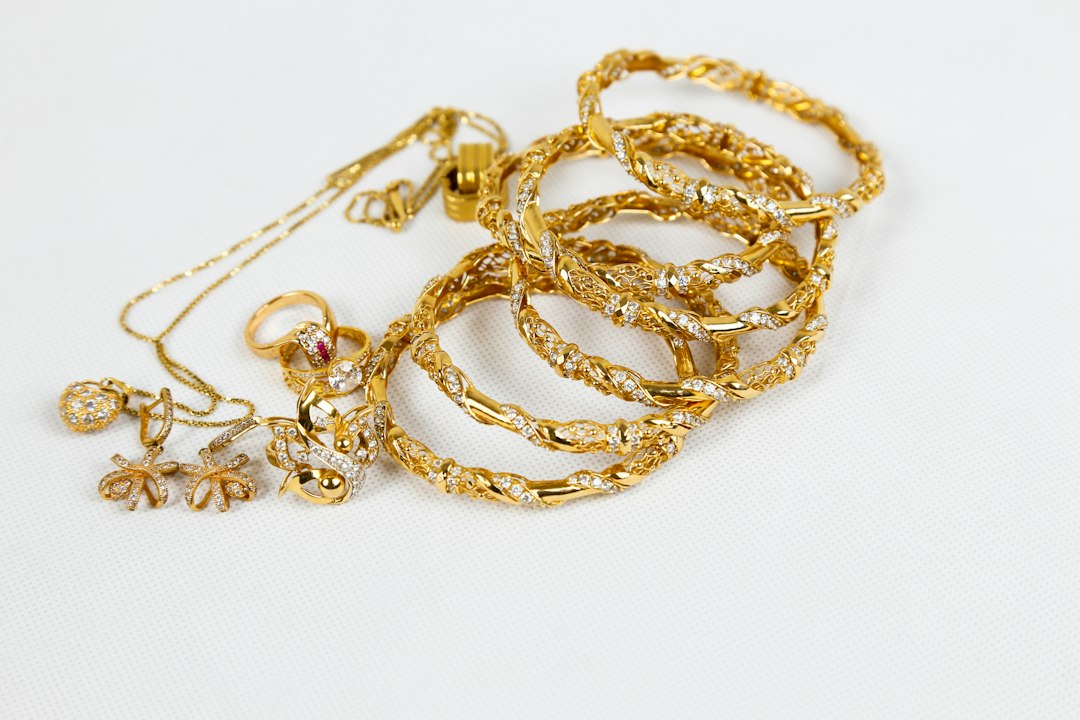
You want to sell your gold jewellery and receive a fair price for it. But “fair” is relative: a pawnshop, a gold buyer and a bank each calculate the price differently, and the gap between the best and worst offer can be as much as twofold. This article provides a formula for checking offers and explains how the three channels differ.
# How buyback prices are calculated: the formula
Here is what actually determines the sum you receive — and what most buyers won’t explain to you.
585-hallmark gold contains 58.5% pure (999) gold. The rest is silver, copper or other metals that the buyer is not interested in. The first step, therefore, is to find out how many grams of pure metal are in your item.
Formula:
Grams of pure gold = item weight (g) × 0.585
Example. A ring weighs 5 g. Pure gold: 5 × 0.585 = 2.925 g.
Next, you need the price of one gram of pure (999) gold in hryvnias. The buyer sets this price themselves, using the international LBMA spot rate and the NBU’s dollar exchange rate as a guide. You can check the official reference price on the NBU website, which publishes accounting prices for banking metals.
The maximum you can expect:
Value = 2.925 g × price per gram of 999 gold
The buyer will never pay you the full amount: they need to make a profit. Their margin is the difference between what they pay you and what they receive when they sell or melt down the metal. Typical margins: 15–35% at gold buyers, 40–60% at pawnshops (meaning they pay 65–85% and 40–60% of the maximum, respectively).
Checking an offer. If a pawnshop offers you UAH X for a 5-gram ring, divide X by 2.925. You get the price per gram they are offering you. Compare that with the current pure gold rate — you will see their margin immediately.
# Pawnshop: fast but cheap
A pawnshop is the quickest option: you receive cash the same day. But it is the client, not the pawnshop, who pays for that convenience.
Pawnshops operate in two modes: pledge (you leave the jewellery as collateral for a loan and can redeem it later) and outright purchase (the pawnshop buys the item immediately). For a pledge, the pawnshop values the item significantly lower — it needs to cover the risk of non-redemption. For an outright purchase the price is slightly higher, but still well below market.
There is another pitfall: some pawnshops weigh an item together with its inserts (stones, enamel) or record a net weight lower than the actual figure. Ask for the item to be weighed in your presence and, where the stones can be removed, separately — metal only.
For more on how pawnshops calculate their real rate, see the article on microloans and pawnshops 2026: the real annual rate.
Who this suits: anyone who needs money immediately and is not focused on maximising the amount. If you have a few hours to spare, compare quotes from gold buyers first.
# Gold buyers: where to get the highest price
Specialist jewellery buyers are generally the most advantageous channel for selling jewellery. They focus on volume and can offer a higher percentage of the metal’s market value.
A few rules that increase the payout:
- Compare several buyers. Even within the same city, the difference between buyers can reach 10–15% of the total. Ring ahead and state the item’s weight — a responsible assessor will give you a rough figure without requiring your presence.
- Bring proof of weight. If the item still has a hallmark stamp and a tag showing the net weight, show it. This makes it harder to manipulate the weight.
- Negotiate. Unlike at a pawnshop, this is normal practice at a gold buyer. If you show that you know the formula and have compared several offers, the assessor is more likely to raise their rate.
What affects a buyer’s margin: the condition of the item (a clean piece will be valued higher), the presence of stones (diamonds and precious gemstones are assessed separately; other stones are a deduction from the metal price), and the maker’s mark (a well-known jeweller occasionally commands a premium, but this is rare when buying for melting down).
Example calculation. Suppose you are selling a 10 g chain with a 585 hallmark. Pure gold: 10 × 0.585 = 5.85 g. Check the current price per gram of pure gold on the NBU website on the day of sale, as it changes daily. If the buyer offers you 70% of the pure metal’s market value, you will receive: 5.85 g × (price per gram × 0.70). The price per gram depends on the dollar exchange rate and the gold spot price — use NBU data for the day of the transaction.
# Bank: bullion and coins only
This is the most common misconception: people walk into a bank to sell a chain or a ring and are turned away. Ukrainian banks do not buy jewellery. They deal exclusively in banking metals: bullion (from 1 g to 1 kg) and coins that they themselves have sold to clients.
If you hold a gold bar or an NBU investment coin, a bank may indeed buy it back — but the buyback price will be lower than the sale price, and the spread can reach 5–15% depending on the bank and market conditions. For information on the terms for storing and purchasing banking metals, see the article gold as savings 2026: bullion, bank, tax on sale.
For whom a bank is simply not an option: anyone selling jewellery. The only routes are a pawnshop or a gold buyer.
# Mistakes that cost you money
There are several common mistakes that reduce your payout — and they are easy to avoid.
Not checking the weight yourself. Weigh the item at home on kitchen or jewellery scales. If the assessor quotes a weight that differs by more than 0.1–0.2 g, that is reason to ask questions.
Selling to the first buyer you find. Even 15 minutes spent ringing two or three gold buyers can add 10–20% to your payout.
Not knowing the current metal price. Without a reference point, you cannot evaluate an offer. Before you leave home, check the NBU website or any financial portal showing gold quotes and note the price per gram of 999 gold in hryvnias.
Selling items with precious stones to an ordinary scrap buyer. If a piece contains diamonds or rubies, a standard melt-down buyer will value them as glass. For such items, seek out specialist pawnshops or jewellery houses that appraise stones separately.
Rushing because of financial pressure. Pawnshops and gold buyers know that a client in difficulty agrees more quickly. If you have even a day to spare, compare offers.
# When to wait rather than sell now
The gold price on the world market fluctuates. Selling jewellery during a price dip means losing 5–10% of the amount through no effort on the buyer’s part.
A simple guide: watch the gold rate for a few days before selling. If the price has fallen compared with the previous week, it may be worth waiting. If the price is at a 52-week high, that is a good moment.
There is one condition under which waiting makes no sense: if you need money now and the alternative is a microloan or an interest-bearing loan, sell the gold immediately. The interest on a loan will almost certainly wipe out any gain from holding out for a better rate.
One more point: if a piece has antique or collectible value, an ordinary melt-down buyer is the worst choice. Such items are better sold through auctions or specialist dealers, where you can receive considerably more than the metal value alone.
# See also
- Microloans and pawnshops 2026: the real annual rate — if you are considering a pledge loan instead of a sale
- Gold as savings 2026: bullion, bank, tax on sale — bank terms for bullion and coins
- Emergency financial cushion 2026: how much, where and how to save — where to put the proceeds
- Calculators — all Kompanion financial tools
Frequently asked questions
How do I calculate what I should be paid for a piece of jewellery?
Multiply the item's weight by 0.585 to get the grams of pure gold. Then multiply that figure by the current price per gram of pure gold from the NBU or LBMA. The buyer will deduct their margin — typically 15–35% of that amount.
Do banks pay for gold jewellery?
No. Ukrainian banks only buy gold bullion and coins that they themselves issued or sold. They will not accept jewellery.
Do I have to pay tax on the sale of gold jewellery?
One-off sales of your own jewellery at a pawnshop or gold buyer rarely result in personal income tax (PIT) being assessed, but income from the sale of property is formally taxable. If the amounts are significant or the transactions are regular, consult the State Tax Service (DPS) or a tax adviser.
What is gross weight and net weight in a jewellery item?
Gross weight is the total weight of the item, including stones, enamel and clasps. Net weight is the weight of the metal only. Buyers pay for net weight (or gross weight if there are no stones), so ask for the item to be weighed without its inserts.
A pawnshop offered me too little — what should I do?
Decline and compare several gold buyers. A pawnshop is not obliged to share its calculations, but you can check any offer yourself using the formula in this article.