How to Buy Euros in Ukraine 2026: Bank vs Exchange vs Privat24
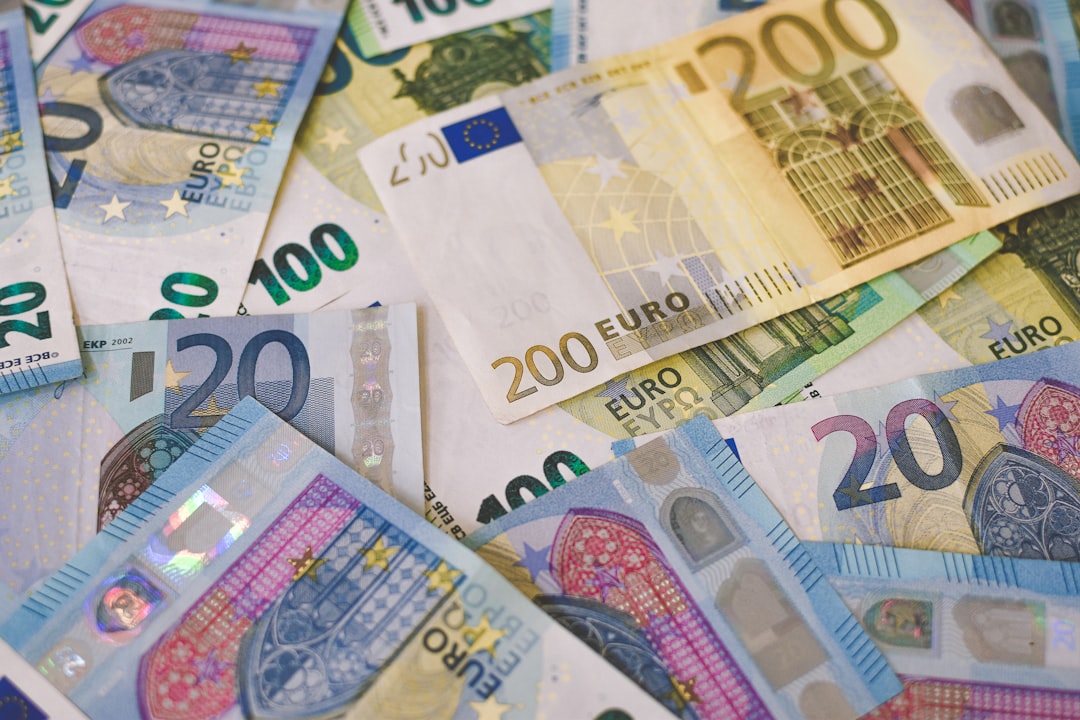
Want to buy euros in Ukraine without overpaying UAH 300–500 per thousand? In 2026 the gap between the worst and best buying option can hit UAH 1.5 per euro. Here’s how to pick the right one.
Three channels — bank, exchange office, and Privat24 — all operate under NBU rules but carry different spreads and documentation requirements. The regulator caps monthly purchases for individuals at UAH 150,000 equivalent. Everything else is your call, and that call costs real money.
# Where to Get the Best Euro Rate in Ukraine Right Now
There’s no single winner — and that’s the honest answer. The rate depends on the amount, the time of day, and the specific location.
For small amounts under €300–400, online banking (Privat24, monobank, Sense Bank) wins almost every time. The spread is UAH 0.3–0.8, the transaction takes 30 seconds, and you don’t go anywhere. But from €1,000 upward, it’s worth checking exchange offices. A good operator in Kyiv or Kharkiv can beat the online rate by UAH 0.2–0.5. On €2,000, that’s UAH 400–1,000 in pure savings.
Bank tellers are the most expensive channel for cash. The spread at Oschadbank or Ukrgasbank often exceeds UAH 1.5–2. Non-cash euro purchases through a bank account — a SWIFT transfer or conversion to a foreign currency account — are a different story; conditions there are considerably better.
One thing most people overlook: exchange office rates change several times a day. Early morning after opening and late evening before closing tend to offer better conditions.
# The UAH 150,000 Monthly Limit — How It Works
The UAH 150,000 monthly limit has been in force since martial law was introduced. At UAH 44/€, that’s roughly €3,400.
The limit is cumulative. If you bought €1,000 through Privat24 and another €1,000 at an exchange office, both count. Banks are theoretically supposed to track this through a central registry, but in practice cross-channel monitoring of cash transactions at private exchange offices isn’t airtight. Still — don’t build schemes around that. The buyer bears responsibility for exceeding the limit.
What’s exempt? Corporate transactions operate under separate regulations. Card payments abroad are also exempt: the funds go directly to the merchant, and the NBU classifies that as a spending transaction, not a currency purchase.
If you need more than UAH 150,000 in a given month, you have two options. First: interbank currency purchase into an account through a licensed bank (different limits apply there). Second: buy next month. There’s no third option — at least not a legal one.
# Buying Euros at a Bank: Documents, Spread, Caveats
A bank teller is the most predictable channel — but rarely the cheapest. The rate is fixed for the whole day, and there’s no negotiating.
To buy cash euros at a teller you’ll need a passport or Ukrainian ID card (mandatory from UAH 5,000), and sometimes your tax identification number. Amounts under UAH 29,999 go through without additional questions. From UAH 30,000, financial monitoring kicks in and the bank may ask you to confirm the source of funds. That’s not arbitrary — it’s required under Ukraine’s anti-money-laundering law.
Spreads at state-owned banks (Oschadbank, Ukreximbank, PrivatBank teller) typically run UAH 1.5–2.5. Commercial banks (FUIB, Raiffeisen, Ukrsibbank) are slightly better at UAH 1–1.8 — but still worse than a decent exchange office.
Where banks actually win is non-cash conversion. If you need a foreign currency account, a SWIFT transfer, or euros on deposit — go to a bank. The transaction is transparent, the rate locks at execution, and you have documentation. That matters for personal financial planning and tax records.
# Exchange Office Euro Rates: How to Avoid a Bad Deal
Exchange offices are a chaotic market. Honest operators with good rates exist alongside murky spots with a UAH 2 gap between buy and sell.
Rule one: never exchange money at an airport, train station, or shopping mall entrance. Spreads there are maximum — UAH 2–3 or more. These locations exist to catch people in a hurry.
Rule two: check rates on aggregators before you go. minfin.com.ua and agiochange.com show real-time rates by specific location. You can find the best rate near you in under two minutes.
Rule three: a legitimate exchange office always holds an NBU licence for currency operations. Ask to see it — they’re legally required to show it. Unlicensed spots operate without documentation and owe you nothing if something goes wrong.
A good exchange office carries a spread of UAH 0.5–1.0 per euro. The market average is around UAH 1.2–1.5. If you see a spread of UAH 2 or more, walk away.
One more thing: most operators will nudge the rate slightly for amounts from €500 upward. Just ask. It’s completely normal practice.
# Privat24 and monobank: Buying Euros Online
For most Ukrainians in 2026, this is the go-to option. Open the app, tap a few times, and your hryvnias convert to euros on a foreign currency sub-account in 30 seconds.
Privat24’s spread runs UAH 0.3–0.8 per euro depending on the time of day and market volatility. monobank holds similar figures. For comparison: a typical exchange office is UAH 1.0–1.5, a bank teller is UAH 1.5–2.5.
There’s a catch. Online conversion gives you non-cash euros. To withdraw them as banknotes you’ll need a PrivatBank ATM (for Privat24) or a bank teller — with an additional fee of 0.5–1%. If you specifically need physical cash, that’s a drawback.
For travellers or anyone paying online in euros, it’s a non-issue. Keep euros on your sub-account and pay with your card abroad. That’s cheaper than carrying cash across a border.
monobank works similarly, though many users find its interface more intuitive for quick conversions. Sense Bank also carries a reasonable spread. It’s worth checking a couple of apps — a UAH 0.2 difference per euro adds up fast on a larger sum.
# Card Conversion When Paying Abroad
Honestly, this is the best option for anyone travelling — and it doesn’t get nearly enough attention.
When you pay with a Ukrainian hryvnia card abroad, the conversion happens at the NBU rate plus your bank’s fee. For most cards that’s 0.3–0.5%. Some tariffs charge 1–2%, but those are increasingly uncommon products.
Do the math: you buy cash at an exchange office with a UAH 1.2 spread per euro (roughly 2.7%), carry it abroad, spend it. Or you pay by card at 0.5%. For a 10-day trip with a €1,500 budget, card payment saves you UAH 300–400 on conversion alone.
Call your bank before you travel: what rate applies to cross-border transactions? Is there a separate fee for payments in foreign currency? Better to know that now than to read the statement when you’re back.
And — if an ATM abroad offers to “lock in a rate right now” through Dynamic Currency Conversion, always decline. That’s a trap: the rate is 3–5% worse than letting the transaction clear in local currency.
# How to Track the Euro Rate and Avoid Buying at the Wrong Moment
This is a skill that saves money with minimal effort. You need two or three tools.
minfin.com.ua — an aggregator of rates across banks and exchange offices, updated several times daily. It shows the best rates in Kyiv, Kharkiv, Odesa, with the address of each specific location.
agiochange.com — more detailed exchange office monitoring with a map. Useful when you want to find the nearest location with a strong rate.
bank.gov.ua — the official NBU reference rate. It’s not a trading rate, but it’s the benchmark for non-cash transactions and calculations.
When’s the best time to buy? In 2026 the euro-hryvnia rate is relatively stable — the NBU maintains a managed float. But intraday swings at exchange offices reach UAH 0.3–0.5. Monday morning tends to be slightly worse; operators price in weekend risk. Tuesday and Wednesday are statistically better.
Don’t try to call the bottom. That’s a loser’s strategy. Buying today at a fair rate beats waiting weeks for the perfect moment.
If you’re planning a larger purchase — say €2,000–3,000 for a trip or savings — split it in two. Buy half today, half next week. That’s simple averaging, and it removes the risk of hitting a peak day.
# Which Option to Choose: Quick Comparison
| Parameter | Bank teller | Exchange office | Privat24 / monobank | Card abroad |
|---|---|---|---|---|
| Spread | UAH 1.5–2.5 | UAH 0.5–1.5 | UAH 0.3–0.8 | NBU + 0.3–0.5% |
| Documents | Passport always required | From UAH 5,000 | In-app verification | Not needed |
| Form | Cash / account | Cash | Non-cash | Non-cash |
| Speed | 10–20 min | 5–10 min | 30 seconds | Instant |
| Best for | FX account, SWIFT | Large cash amounts | Up to €500 online | Paying abroad |
# Common Mistakes When Buying Euros
The most widespread one: buying currency “quickly” at the first place you see. Three minutes on minfin.com.ua saves UAH 200–400. That’s a fact.
Second mistake: agreeing to a rate without checking banknote denominations. Some exchange offices quote a good rate for large bills (€200) but offer worse terms for small ones (€10–20). Ask upfront.
Third: ignoring hidden fees at a bank. “No commission” usually means the fee is baked into the spread. Ask to see the actual buy and sell rates, then do the arithmetic yourself.
And finally: don’t keep large amounts of euro cash at home. It’s not an investment — it’s a risk. If you need a foreign currency cushion, a foreign currency deposit or a bank sub-account at a well-rated institution is the right move.
# See also
- Best bank deposits in Kyiv 2026
- Best crypto exchanges for Ukrainians 2026
- How to cash out USDT in Ukraine 2026
- Currency rates
- Deposits
- Banks
Frequently asked questions
How many euros can I buy per month in Ukraine without restrictions?
The NBU limit is UAH 150,000 equivalent per month for individuals. At roughly UAH 44 per euro, that's about €3,400. The limit is cumulative across all channels — bank, exchange office, and online purchase all count together.
Do I need a passport to buy euros at an exchange office?
Yes, from UAH 5,000 upward — it's mandatory under financial monitoring rules. Below UAH 5,000 you're technically exempt, but most operators will ask for ID anyway.
Privat24 or exchange office — which gives a better rate?
It depends on the amount. Under €500, Privat24's spread (UAH 0.3–0.8) is usually better than a typical exchange office. Above €1,000, well-rated exchange offices in Kyiv or Kharkiv can beat online rates by UAH 0.2–0.3 — but you need to check agiochange.com or minfin.com.ua first.
Can I buy euros with zero commission?
'Zero commission' is marketing. The profit is built into the spread between the buy and sell rates. Explicit fees on top are rare these days, but the spread is always there.
How does card conversion work when paying abroad?
The payment network (Visa/Mastercard) converts at the NBU rate; your bank adds 0.3–2% depending on your tariff. This is often cheaper than carrying cash — check your card's fee schedule before you travel.