VAT for Sole Traders in Ukraine 2026: When It's Mandatory and How to Register
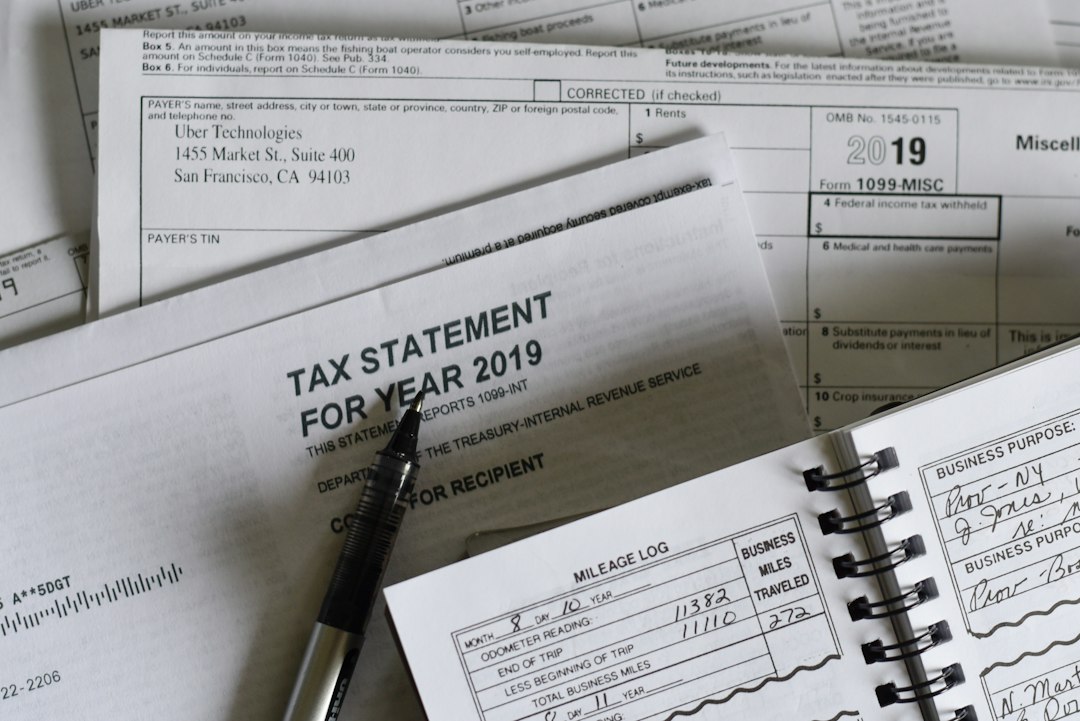
Turnover crosses a million — and you’re no longer just a sole trader. You’re a potential VAT payer. That’s where the headaches start: when exactly do you register, what do you do with tax invoices, and how do you avoid a UAH 10,200 fine for missing the application deadline?
VAT is a value-added tax. You charge it on top of your price, collect it from the customer, then remit to the budget the difference between the VAT you charged and the VAT you paid to your own suppliers. Section V of Ukraine’s Tax Code governs all of this; the State Tax Service (STS) administers it. The mandatory registration threshold in 2026 is UAH 1,000,000 in turnover over the preceding 12 calendar months. Two rates apply: 20% (standard) and 14% (reduced, for specific medical devices and agricultural products).
# Which FOP groups must pay VAT
Group 3 sole traders on the 3% flat-tax rate are the only group that formally combines the flat tax with VAT. They pay 3% of income as a flat tax and charge VAT on every transaction on top of that.
Group 3 on the 5% rate doesn’t pay VAT — that’s the core difference between the two sub-rates. But if their turnover exceeds UAH 1 million, they must either switch to the 3% + VAT track or leave the flat-tax system entirely and move to the general tax regime, where VAT becomes mandatory.
Groups 1 and 2 are a different story. They cannot be VAT payers, full stop. Sub-clause 291.5.3 of the Tax Code explicitly prohibits it. If your business grows to the point where VAT is unavoidable, you need to change groups or switch to the general system.
| FOP group | Flat-tax rate | VAT | Once turnover exceeds UAH 1 million |
|---|---|---|---|
| Group 1 | Up to 10% of minimum wage | Prohibited | Forced transfer to Group 3 |
| Group 2 | Up to 20% of minimum wage | Prohibited | Forced transfer to Group 3 |
| Group 3, 3% | 3% of income | Mandatory | Continues operating — VAT already built into the regime |
| Group 3, 5% | 5% of income | Not paid | Must register as a VAT payer or switch to the 3% rate |
| General tax system | Personal income tax 18% + military levy 5% | Mandatory above UAH 1 million | Mandatory registration |
# The UAH 1 million threshold: how to calculate and when to file
The threshold isn’t measured over a calendar year — it’s the preceding 12 calendar months. That distinction trips up a lot of people. If January 2025 through January 2026 added up to UAH 1,050,000, registration is mandatory even though the formal “year” isn’t over.
The calculation includes all taxable transactions: sales of goods, works, and services. It excludes transactions exempt from VAT under Article 197 of the Tax Code — licensed medical services, educational services covered by the Cabinet of Ministers list, and similar.
The registration application is due by the 10th of the month following the breach. Crossed the threshold in May? File by June 10. The STS registers you from the 1st of the month after you file. File in June, become a VAT payer from July 1.
And honestly — this is one of those traps even experienced entrepreneurs fall into. Turnover climbs gradually, the threshold gets crossed quietly mid-month, and then you suddenly realize you’ve missed the deadline.
# Voluntary VAT registration: when it makes sense
Voluntary registration is available at any turnover level — even UAH 100,000 a year. Why bother? One scenario: your clients are companies or VAT-registered sole traders. They want to claim input VAT credit. If you’re not a VAT payer, you’re not useful to them and they go to your competitors.
A second scenario: you’re buying expensive goods that include VAT, and the input credit genuinely reduces your liability. Buy UAH 240,000 worth of equipment (UAH 40,000 of that is VAT) — that UAH 40,000 can be offset against what you owe.
But there’s a flip side. Voluntary registration means monthly declarations, tax invoices, an SEA account, and real administrative overhead. If your customers are individuals who can’t use VAT credits, registration will either add 20% to your price or eat straight into your margin. Think it through carefully.
# VAT rates for sole traders in 2026: 20% and 14%
The standard rate is 20%. It applies to the vast majority of transactions: selling goods, providing services, importing.
The 14% rate is a reduced one. It applies to specific medical devices per the Cabinet of Ministers list (Resolution No. 569) and certain agricultural products. It’s not a discount you opt into — your product must be explicitly listed in the approved schedule. Check the UKT ZED (Ukraine’s customs tariff code) for your goods before applying 14%.
The zero rate (0%) covers export transactions. A sole trader supplying goods abroad charges 0% VAT but retains the right to claim input VAT credit — meaning VAT already paid to suppliers is refunded or offset. That’s genuinely valuable for exporters.
| Rate | Application | Examples |
|---|---|---|
| 20% | Standard — most transactions | Retail, services, rental, repair |
| 14% | Medical devices per Cabinet of Ministers list; agricultural goods | Medical equipment with UKT ZED codes from Resolution No. 569 |
| 0% | Export of goods, international transport | Sales to foreign counterparties |
| Exempt | Transactions under Article 197 of the Tax Code | Licensed medical services, education, social services |
# How to register as a VAT payer step by step
Registration goes through the STS — in person, via the Electronic Taxpayer Cabinet, or through a notarially authorized representative.
Step 1. Prepare the application using Form No. 1-PDV. Download it from the STS website or fill it in directly inside the Electronic Cabinet at cabinet.tax.gov.ua. The form asks for: your FOP details, the reason for registration (mandatory or voluntary), and the date turnover exceeded the threshold.
Step 2. Submit the application. Three options:
- In person at the STS office where your FOP is registered;
- Through the Electronic Cabinet with a qualified electronic signature (QES);
- Through the Diia government app — if available in your region.
Step 3. Wait for the decision. The STS must process the application within 3 business days. For voluntary registration it may request supporting documents. For mandatory registration, rejection is nearly impossible if the paperwork is in order.
Step 4. Get your status confirmed. Physical VAT certificates were abolished in 2014. Your VAT payer status is now verified online through the STS register using your tax identification number (TIN). That’s how counterparties will check you before issuing invoices.
Step 5. Activate your SEA account. The Electronic VAT Administration system (Ukrainian: СЕА — Система електронного адміністрування) automatically opens an account at the State Treasury. Confirm it’s active — without it you can’t register tax invoices.
# Tax invoices: obligations of a VAT-registered sole trader
Every sale generates a tax invoice — more precisely, every transaction that creates a tax liability. Each invoice must be registered in the Unified Register of Tax Invoices (Ukrainian: ЄРПН — Єдиний реєстр податкових накладних) via the Electronic Cabinet using a QES.
Deadlines: 15 calendar days from the invoice date for transactions in the first half of the month, or by the last day of the month for transactions in the second half. Miss the window and the fines kick in: 2% of the VAT amount if you’re up to 15 days late; 10% for 15–30 days; 20% for over 30 days.
Here’s something to understand from day one: your buyer can’t claim input VAT credit until the invoice is registered in the register. Your delay is their financial loss. That’s why large counterparties monitor invoice status obsessively.
One thing many people miss: not every buyer needs an invoice sent to them. If the buyer is an individual (not a company or VAT-registered sole trader), you issue the invoice “to yourself” — this is called a type “02” reason invoice. It still gets registered in the register; the buyer simply doesn’t receive a copy.
# VAT reporting for sole traders: declaration, deadlines, fines
The VAT return is filed monthly. No quarterly option — only monthly. Deadline: by the 20th of the month following the reporting period. May’s return is due June 20.
The form is No. 0110, approved by the Ministry of Finance. It’s submitted electronically through the Electronic Cabinet only — paper hasn’t been accepted since 2017.
The declaration is accompanied by annexes: Annex D1 (adjustment calculations), Annex D5 (input credit breakdown), and others as needed. Most sole traders manage with just the base declaration and D5.
Penalty schedule:
| Violation | Fine |
|---|---|
| Late declaration filing | UAH 340 per violation (first time); UAH 1,020 — repeat within the year |
| Understated tax liability | 25% of understated amount (first time); 50% — repeat |
| Late invoice registration (up to 15 days) | 2% of VAT on the invoice |
| Late invoice registration (15–30 days) | 10% of VAT |
| Late invoice registration (over 30 days) | 20% of VAT |
| Failure to register as VAT payer when mandatory | UAH 10,200 + VAT on all transactions retroactively |
# The Electronic VAT Administration system (SEA): how it works
SEA — the Electronic VAT Administration system (Ukrainian: Система електронного адміністрування ПДВ) — was introduced in 2015 and fundamentally changed how VAT works in practice. The core idea: every VAT payer holds a dedicated account at the State Treasury. All VAT payments flow through it.
In practice: you register a tax invoice for UAH 20,000 in VAT — the system automatically reserves that amount as a registration limit on your SEA account. If the balance is insufficient, you can’t register the invoice.
You can top up the SEA account any time from your regular FOP current account. The key rule: the balance on your SEA account at the payment date is automatically swept to the budget. Any surplus above your liability stays in the account or can be refunded on application.
Input VAT — the tax credit — works as an offset: if you bought goods including VAT from a registered VAT payer and received a properly issued invoice, you deduct that amount from your liability. The logic is straightforward: you pay the budget only the difference between what you collected from customers and what you already paid to suppliers.
# Tax credit: what qualifies and what doesn’t
Tax credit is the VAT you paid to suppliers that you’re entitled to deduct from your own liability. Not every VAT-inclusive expense automatically qualifies.
You can include in the credit if:
- the transaction is related to your business activity as an FOP;
- the supplier is a registered VAT payer;
- the tax invoice is registered in the URTI.
You can’t include it if the invoice isn’t registered. You can’t if the goods were purchased for non-commercial use. And — a common mistake — you can’t claim VAT credit on goods used in VAT-exempt transactions.
The credit inclusion window: 1,095 days from the invoice date. That’s three years — a comfortable buffer if you catch a period error before it expires.
# When a VAT-registered sole trader is better off switching regimes
Honestly: VAT payer status isn’t always a benefit. When does it actually drag a business down?
Scenario 1: You sell to individuals — a retail shop, consumer services. VAT is built into your price, but customers gain nothing from your status. You end up competing with non-VAT-payers who can offer prices 20% lower (or carry a 20% higher margin).
Scenario 2: You have little input VAT — no large purchases from VAT-registered suppliers. The tax credit is minimal, and you’re remitting close to the full 20% on revenue.
Scenario 3: The admin load is genuinely killing productivity — monthly returns, invoices, SEA account management take more time than the tax savings are worth.
But if turnover has already crossed UAH 1 million, the question of “exiting” VAT gets complicated fast. Options include restructuring the business to bring turnover below the threshold or switching to Group 3 at 5% with voluntary deregistration — provided you can hold revenue below the threshold. That’s a strategy worth working through with a tax advisor.
Once you’ve got VAT sorted, it’s worth looking at the broader picture — check our guide on accepting international payments as a Ukrainian sole trader if you’re working with foreign clients. And if you’re still figuring out the accountant question, our breakdown of accountant services for FOP in Ukraine covers liability, costs, and what to watch out for.
Subscribe to Kompanion — we cover real Ukrainian business cases, tax changes, and financial tools in plain language. Next up: bank guarantees for public tenders — who qualifies, what they cost, and which banks actually issue them.
# See also
Frequently asked questions
Can a Group 3 sole trader avoid VAT registration?
Yes — until annual turnover hits UAH 1,000,000. Once that threshold is crossed, registration is mandatory. A Group 3 FOP on the 3% flat-tax rate already pays VAT; one on the 5% rate does not.
When do I need to submit a VAT registration application?
By the 10th calendar day of the month after the month in which turnover exceeded UAH 1 million. Missing that deadline means a fine and forced registration by the STS.
How is the VAT tax base calculated for a sole trader?
The base is the contract price of goods or services excluding VAT. If you sell for UAH 12,000 including VAT, the base is UAH 10,000 and VAT is UAH 2,000. That difference is what you remit to the budget.
Does a VAT-registered sole trader still need an income ledger?
Yes, the income ledger remains mandatory. On top of that, a VAT-registered FOP must register every tax invoice in the Unified Register of Tax Invoices (URTI) and file a monthly declaration.
What happens if I don't register on time?
The STS registers you automatically. The penalty is UAH 10,200 (10% of the subsistence minimum × 170 non-taxable minimums). All transactions processed after the threshold was crossed are also subject to VAT retroactively.
Can I voluntarily cancel VAT registration?
Yes, if turnover hasn't exceeded UAH 1 million over the past 12 months. You submit a deregistration application. The STS can refuse if there are outstanding VAT liabilities.