Crypto Exchange KYC in 2026: Documents, Tier Levels, and How to Pass Fast
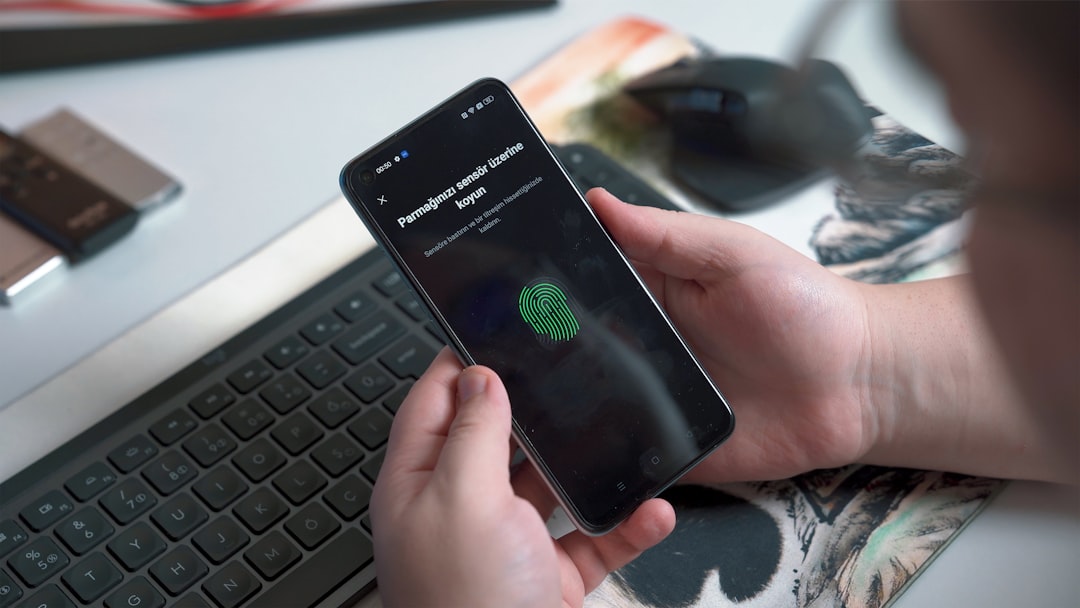
Skip KYC on Binance and you’ll hit a wall at your first $1,000 withdrawal. That’s not a bug — it’s policy. In 2026, the process takes anywhere from 5 minutes to a full day, depending on your preparation and queue luck. Here’s what exchanges actually check and why they bother.
KYC (Know Your Customer) is the standard identification procedure that exchanges must run under FATF rules and national regulations. For Ukrainian users, this is especially relevant: WhiteBIT (Ukraine’s largest domestic crypto exchange) has operated under NSSMC supervision since 2024 and requires verification from every user with any transaction volume. Binance and Bybit are international platforms, but they apply the same rules to Ukrainian clients. Practically speaking, KYC is the only thing standing between you and full platform access.
# Why Exchanges Require KYC and What Happens Without It
Without KYC, you get a restricted account — capped withdrawals, no fiat, and limited access to products.
Exchanges didn’t introduce mandatory identification by choice. FATF (the intergovernmental Financial Action Task Force on money laundering) set the standards in 2019, after which platforms across Europe and the US rolled out KYC procedures en masse. Ukraine aligned with these requirements through its financial monitoring legislation.
What does “without verification” actually mean in practice? On Binance: no buying crypto with fiat, no withdrawals to a bank card, no derivatives trading. On WhiteBIT: not a single hryvnia transaction goes through. Bybit caps daily withdrawals at the equivalent of $1,000 and disables P2P trading.
There are KYC-free exchanges — decentralized ones (DEXs like Uniswap or dYdX). But they don’t support fiat, have no customer service, and work very differently in terms of liquidity. For most newcomers, that’s not a realistic option.
# KYC Tier Levels — Tier 1, Tier 2, Tier 3: Limits and Requirements
Tier 1 is basic verification (email + phone + passport + selfie) and unlocks up to $2,000/day on Binance in 2026. Tier 2 requires proof-of-address and raises the limit to $100,000/day.
Tier 2 covers most private traders. But if you’re operating as a sole proprietor (Ukrainian: ФОП) and running transactions under a business entity, look into Tier 3. WhiteBIT has a dedicated form for Ukrainian ФОП with a simplified document package.
One thing worth noting: tiers don’t activate automatically. You choose how far to go.
# Documents Required for KYC in 2026
A passport and selfie are the minimum for Tier 1. For Tier 2, add a proof-of-address — a document confirming your residential address.
For Tier 1 (Basic KYC):
- Ukrainian passport (domestic or biometric international)
- Biometric ID card (the plastic card) — accepted on all three platforms; upload both sides
- Selfie holding the document (live photo, not a scan)
For Tier 2 (Advanced KYC), additionally:
- Proof-of-address — a document with your full name and address, issued within the last 3 months
- Acceptable: utility bill, bank statement, notarized rental agreement
One practical note: if you don’t have utility bills in your own name (say, you’re living with family), a bank statement from a Ukrainian bank works. Privatbank and Monobank (Ukraine’s leading digital bank) both generate a downloadable PDF statement directly in their mobile apps — takes about two minutes.
Documents must be valid at the time of submission. Sounds obvious, but an expired passport is the single most common reason for automatic rejection.
# How to Verify on Binance Step by Step
Tier 1 on Binance takes 5–15 minutes via the mobile app or browser.
- Log in → Profile → Identity Verification
- Select your country — Ukraine. The system immediately shows available document types
- Choose your document: passport, ID card, or international passport
- Photograph the document in real time using the app’s camera — don’t upload old scans
- Take a selfie with the document as instructed on screen
- Wait for the result — usually 5–30 minutes; up to 24 hours during peak traffic
For Tier 2, the flow is the same with an added proof-of-address upload. Binance accepts PDF or JPEG, with a 5 MB file size limit.
Editorial tip: Run your KYC during the first half of the day in Central European Time. Automated systems work around the clock, but if your application gets routed to manual review, human operators are most active in the morning. Submissions sent overnight sit in a queue.
If Binance isn’t the right fit, check out our guide to the best crypto exchanges for Ukrainians in 2026 — we compared Binance, Bybit, OKX, WhiteBIT, and Kuna.
# KYC on Bybit and WhiteBIT: Differences and Speed
Bybit processes Tier 1 in roughly 10 minutes on average. WhiteBIT is the fastest among Ukrainian platforms — often under 5 minutes.
Bybit: Verification lives under Account → KYC Verification. The platform accepts passports, ID cards, and driver’s licenses (though for Ukrainian users, only passport or ID card — driver’s licenses aren’t supported for Ukraine). Proof-of-address for Tier 2 follows the standard format. Bybit uses Jumio as its verification provider, so data is encrypted to banking-grade standards.
WhiteBIT: Being a Ukrainian platform, it shows. The interface is available in Ukrainian, support responds quickly, and the system recognizes Ukrainian documents well. To verify: Profile → Verification. Ukrainian residents get a simplified flow for the basic tier — just an ID card, no additional documents required. Tier 2 is standard: passport plus proof-of-address.
Both Bybit and WhiteBIT let you start trading before verification is complete — but with strict limits. Better to clear Tier 1 before making your first deposit.
# Why KYC Gets Rejected: Top 7 Reasons
Blurry photo and poor lighting top the list. But there are six more reasons most people don’t think about until they’re staring at a rejection notice.
| Rejection reason | What happens | How to fix it |
|---|---|---|
| Blurry or dark photo | System can't read the data | Retake in natural light, no flash |
| Corners cropped | Document not fully visible | Make sure all 4 corners are in frame |
| Expired document | Automatic rejection | Use a valid document |
| Name mismatch | Account name ≠ document name | Update profile details before submitting KYC |
| Edited photo | System detects Photoshop or filters | Original photo only, no editing |
| VPN active during verification | IP doesn't match document jurisdiction | Turn off VPN before starting |
| Glare on laminate | Serial number and data are unreadable | Shoot at a 30–45° angle, not straight on |
A separate issue: when an exchange freezes an account due to data inconsistencies. That’s no longer a simple “try again” — it means filing a support ticket and explaining the discrepancy. The cleaner fix is to fill in your profile exactly as your passport reads from the start, including the transliteration of your name.
# How to Pass KYC Fast: Practical Tips
Prepare your documents and shooting conditions in advance — the whole process shouldn’t take more than 10 minutes.
Technical tips:
- Photograph your document against a dark, plain background — systems detect edges more reliably
- Use your phone’s camera, not a laptop webcam — the resolution is significantly better
- For international passports, open to the photo page — not the cover
- Disable your VPN before starting verification, re-enable it after
Process tips:
- Complete KYC immediately after registration, before your first deposit — there’s no pressure from limits yet
- For Tier 2, download your bank statement from Privatbank or Monobank in advance — it takes about two minutes in the app
- If the automated system rejects your submission, wait 30 minutes before trying again. No need to contact support immediately
Honestly, most rejections come down to rushing. People photograph a document in a dim room, don’t check whether all details are legible, and get a rejection within 30 seconds.
# KYC and Security: Where Does Your Data Go
Exchanges pass verification data to third-party providers — Jumio, Sumsub, Onfido. This is standard practice, sanctioned by regulators.
Your data is stored encrypted for at least 5 years after account closure, per FATF requirements. Verification providers operate under ISO 27001 standards and process data on servers in the EU or the US. Binance, for instance, works with Jumio — one of the largest digital identity verification firms globally.
That said, there are no absolute guarantees anywhere. Data breaches happen — they’ve hit various services over the years. So it’s worth using a biometric international passport rather than a domestic one where possible: it contains less personal information about your registered address and family status.
One more thing: never complete KYC by clicking a link from an email or messaging app. Only use the official app or a website address you’ve typed yourself. Phishing pages replicate Binance’s interface so accurately that the only visible difference is in the address bar.
KYC is not an obstacle — it’s a standard procedure that takes 10 minutes with the right preparation. Complete Tier 1 right after registration; don’t wait for a blocked withdrawal to push you into it. And if you’re trading serious volumes, Tier 2 covers everything a private trader needs.
Subscribe to Kompanion — every week we publish practical guides on crypto, finance, and business strategies for the Ukrainian market.
# See Also
- Best Crypto Exchanges for Ukrainians in 2026
- Best P2P Platforms to Sell USDT in Ukraine
- Crypto Exchanges
- Crypto Rates
- Currency Exchange
Frequently asked questions
Is KYC mandatory on crypto exchanges?
It depends on the platform and what you want to do. Without KYC, most exchanges cap withdrawals at around $1,000/day or block fiat entirely. Binance has required at least Tier 1 for any real-money operations since 2023. WhiteBIT made verification mandatory for all Ukrainian users in 2024, following NSSMC regulations.
Why was my KYC rejected and what should I do?
The most common reasons: blurry document photo, cropped edges, or glare on the surface. Less often — a name mismatch between the document and your account, or an expired passport. The fix is simple: retake the photo in good lighting, make sure all four corners are visible, and resubmit. Most exchanges allow 3–5 attempts.
Can I complete KYC with a Ukrainian ID card instead of a passport?
Yes. Ukraine's biometric ID card (the plastic card) is accepted on Binance, Bybit, and WhiteBIT. Upload both sides — front and back. A biometric international passport also works and often clears verification faster because automated systems read the machine-readable zone more reliably.
How long do exchanges keep my KYC data?
FATF rules require exchanges to retain identification data for at least 5 years after account closure. Major platforms — Binance, Bybit — work with verification providers like Jumio and Sumsub, which store data on encrypted servers. Check the Privacy Policy of your specific exchange for exact retention periods and storage region.
What is corporate KYC and when do I need it?
Business verification (Tier 3 or Business KYC) is for legal entities — sole proprietors (Ukrainian: ФОП), LLCs, and foreign companies. You'll need a charter, registry extract, and beneficial owner details. Processing takes 3–14 business days. WhiteBIT has a dedicated form for Ukrainian sole proprietors (ФОП).