ERC-20 vs TRC-20 vs BEP-20: Which USDT Network Should You Use in 2026?
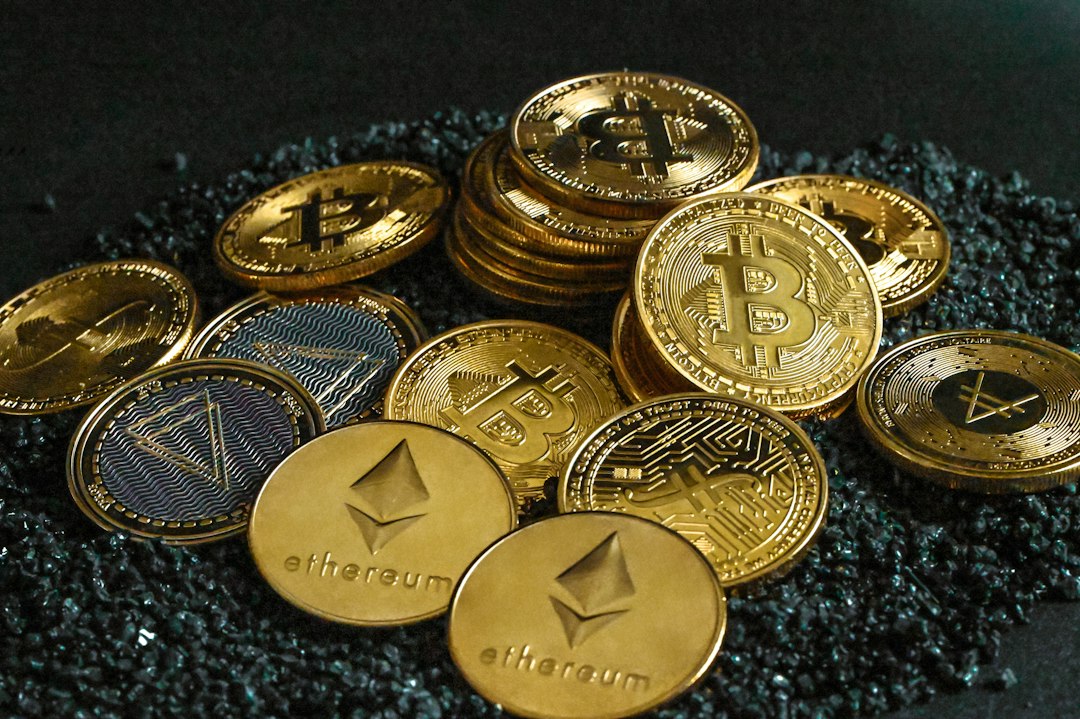
Anyone who’s ever withdrawn USDT from an exchange has seen the choice: ERC-20, TRC-20, BEP-20. Most people just guess. In 2026, the average Ethereum network fee sits at $5–20 per transaction — the same transfer on TRC-20 costs you 1 USDT.
The difference between ERC-20 and TRC-20 isn’t marketing fluff or programmer trivia. It’s real money, and it’s the risk of losing a transfer with zero recourse. These three standards live on three separate blockchains, and their addresses don’t cross over — sending USDT “to the wrong place” means it’s gone.
# Why Choosing the Wrong Network Means Losing Your Money
If the recipient’s address only supports TRC-20 and you send via ERC-20, the funds vanish. That’s not an exaggeration — it happens constantly.
Blockchain transactions are irreversible by design. There’s no support team that can “undo” a mistaken transfer. That’s exactly why the network is the first thing to confirm with the recipient before you hit send.
So why do three standards even exist? Historically, USDT (Tether) started on Bitcoin via the Omni protocol, then moved to Ethereum (ERC-20) in 2017–2018. When Ethereum became congested and gas prices climbed, alternatives emerged: Tron launched TRC-20 in 2018, Binance followed with BEP-20 in 2020. Each network solved the same problem differently.
For most users in Ukraine, TRC-20 has become the de facto standard for P2P trading and crypto exchanges. But that doesn’t make it the right choice in every situation.
# TRC-20 (Tron): Why 70% of Users Pick It
TRC-20 is the cheapest way to move USDT. The fee is flat: around 1 USDT regardless of the amount or time of day.
The Tron network processes transactions in 1–3 minutes. No fee volatility, no waiting in a mempool queue. Send $10,000 or $50 — you pay the same.
That’s why TRC-20 dominates in:
- Crypto exchanges — Ukrainian crypto exchanges (обменники) use TRC-20 as their primary standard
- P2P trading — most listings on Binance P2P specify TRC-20
- Regular payments — if you receive salary or freelance payments in USDT, TRC-20 cuts your costs significantly
There’s a caveat though. Tron is a more centralized network than Ethereum — that’s a technical fact, not a value judgment. A small number of validators control the network, which creates theoretical risks. In practice, this has never caused problems for ordinary users, but it’s worth knowing.
TRC-20’s other weakness: not every exchange and service supports it. Some DeFi protocols and Western platforms work exclusively with ERC-20.
# ERC-20 (Ethereum): Expensive but Unavoidable in DeFi
ERC-20 is the original USDT standard and the most widely supported. Fees run $5–20 under normal conditions; higher during congestion periods.
Why do people pay that much? Gas on Ethereum is payment for computational resources across the entire decentralized network. More simultaneous transactions means higher gas prices — it’s a market mechanism baked into the protocol.
And yet ERC-20 is irreplaceable in specific scenarios:
DeFi protocols. Uniswap, Aave, Compound, Curve — all of these run on Ethereum. If you want to put USDT to work in decentralized finance, you need ERC-20. No workaround exists.
Major exchanges. Coinbase, Kraken, and many European platforms accept USDT only as ERC-20. When working with Western services, it may be your only option.
NFTs and smart contracts. Working with tokens or NFTs on Ethereum? ERC-20 is your default network.
Paying $15 to transfer $200 is absurd. But if you’re sending $5,000 to Coinbase or into a DeFi protocol, ERC-20 becomes the only sensible choice. Context is everything.
# BEP-20 (Binance Smart Chain): Who Actually Needs It?
BEP-20 is Binance Smart Chain’s standard, with fees of $0.10–0.50. Price-wise it’s close to TRC-20; infrastructure-wise it’s tied to Binance’s ecosystem.
Speed is comparable to TRC-20: 1–5 minutes for confirmation. Technically, BEP-20 is nearly identical to ERC-20 — BSC was built to be compatible with the Ethereum Virtual Machine.
BEP-20 genuinely makes sense for:
- Binance users — internal transfers between accounts and withdrawals to BNB Chain wallets
- PancakeSwap and BSC DeFi — if you’re working with Binance Smart Chain protocols
- MetaMask with BSC configured — the wallet supports BEP-20 once you manually add the network
Honestly though, BEP-20 loses to TRC-20 on penetration among Ukrainian exchanges and P2P platforms. And it loses to ERC-20 on compatibility with Western platforms. It’s the standard for people operating inside Binance’s world.
# TRC-20 vs ERC-20 vs BEP-20: Full Comparison
| Parameter | TRC-20 (Tron) | ERC-20 (Ethereum) | BEP-20 (BSC) |
|---|---|---|---|
| Fee | ~1 USDT | $5–20 | $0.10–0.50 |
| Speed | 1–3 min | 2–15 min | 1–5 min |
| Decentralization | Low | High | Medium |
| DeFi support | Limited | Full | Medium (BSC DeFi) |
| Exchange support | High | Universal | Medium |
| Ukrainian exchanges | Primary standard | Rarely | Occasionally |
| Best use case | P2P, exchanges, transfers | DeFi, Western exchanges | Binance ecosystem |
# How to Choose the Right Network for Your Use Case
One rule: find out what the recipient supports first. Everything else is secondary.
Sending to a friend or via P2P? Ask which network they accept. Most users in Ukraine will say TRC-20 — and for small amounts, that’s the right answer.
Withdrawing to a Western exchange or DeFi? Check the deposit page on the recipient’s platform. Coinbase? Kraken? Almost certainly ERC-20. Aave or Uniswap? Definitely ERC-20.
Operating inside Binance? BEP-20 saves you on fees compared to ERC-20. Just make sure the next recipient also works with BSC.
Sending a large amount — say, $10,000? The logic shifts slightly. Even a $15 ERC-20 gas fee is 0.15% of that amount, which is acceptable. TRC-20 costs 1 USDT — roughly 0.01%. If the recipient supports both, the choice is obvious.
And never — literally never — send without verifying the address. Sending a small test amount first (say, $1) is reasonable when transferring to a new address for the first time.
If you’re interested in the broader topic of crypto transfers, check out our guide on the best P2P platforms for selling USDT in Ukraine — it covers platform fees and how network choice affects your net earnings.
# How to Check Which Network an Exchange or Wallet Supports
Three steps before every transfer.
Step 1. Open the deposit/receive section on the recipient’s platform. On any exchange, the USDT address will specify the network standard right next to it. Exchanges highlight this deliberately — because mistakes happen constantly.
Step 2. Match the address format to the network. TRC-20 addresses start with the letter T (e.g., TGjY7xnL…). ERC-20 and BEP-20 addresses both start with 0x — and here’s where it gets tricky: the two look identical visually, but they’re on different networks. MetaMask defaults to Ethereum but supports BSC once you add it as a custom network.
Step 3. Check the minimum withdrawal amount. Many exchanges set a floor — for example, 10 USDT for TRC-20. Send less than that and the transaction simply won’t go through.
Also worth knowing: for anyone still picking a crypto exchange, see our breakdown of the best crypto exchanges for Ukrainians in 2026 — network fees and trading fees stack up fast.
# What Changes in 2026: Should You Wait for New Networks?
New standards are a normal part of crypto markets. In 2026, Ethereum’s Layer-2 networks are growing fast: Arbitrum, Optimism, Polygon. Many of them support USDT with fees comparable to TRC-20, but with Ethereum’s infrastructure underneath.
The problem: L2 network support among Ukrainian exchanges and P2P platforms is still minimal. For most users in Ukraine, these remain niche options.
Through 2026, the balance of power stays put. TRC-20 is the default for transfers and exchanges. ERC-20 is for DeFi and Western platforms. BEP-20 is for those working inside Binance.
Watch the major exchanges for signals — when Binance or OKX (one of the world’s largest crypto exchanges) start actively promoting a new network, that’s your cue to reconsider. That hasn’t happened yet.
Follow Kompanion for crypto coverage without the hype — just numbers, practical use cases, and real scenarios for users across Eastern Europe.
# See also
- Best Crypto Exchanges for Ukrainians in 2026
- Best P2P Platforms to Sell USDT in Ukraine
- Crypto exchanges
- Currency rates
- Calculators
Frequently asked questions
Can you send USDT from a TRC-20 address to an ERC-20 address?
No — that's a guaranteed loss. Addresses on different networks are incompatible; the transaction will either fail or the funds will disappear. Always confirm which standard the recipient's exchange or wallet supports before sending.
Which USDT network does Binance use for withdrawals?
Binance supports all three — ERC-20, TRC-20, and BEP-20. Most users default to TRC-20 because of the flat ~1 USDT fee. But if the recipient is a DeFi protocol on Ethereum, you'll need ERC-20.
Is TRC-20 safer than ERC-20?
Both networks are reliable. ERC-20 is older, more battle-tested, and more decentralized. TRC-20 is more centralized but far cheaper. The real risk isn't the protocol — it's sending on the wrong network.
Why are ERC-20 fees so high?
Gas on Ethereum pays for computational resources across the decentralized network. When activity spikes — during NFT or DeFi hype cycles — gas prices surge. In 2021, individual transactions hit $50–100.
Is BEP-20 the same as BSC?
BEP-20 is the token standard; BSC (Binance Smart Chain) is the network itself — the same way ERC-20 is the standard and Ethereum is the network. BEP-20 tokens work within Binance's ecosystem and are compatible with MetaMask once you manually add the BSC network.